
When people search for music lessons, piano lessons, a professional piano teacher, or even a Russian music teacher trained in the classical tradition, they may believe they are looking for instruction. But what they are often seeking — whether consciously or not — is transformation.
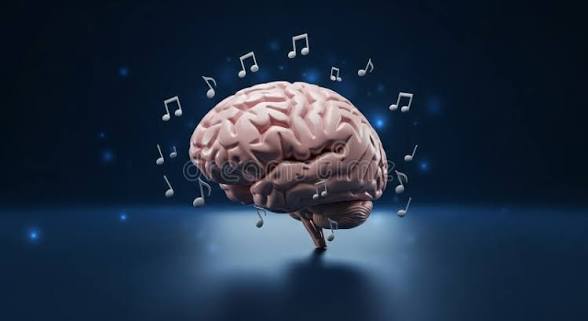
Because learning music does not simply teach a skill.It physically changes the brain.
Neuroscience has repeatedly shown that structured musical training reshapes neural pathways. A landmark study published in The Journal of Neuroscience demonstrated measurable structural brain changes in children after just 15 months of music training (Hyde et al., 2009).
https://www.jneurosci.org/content/29/10/3019
A comprehensive review in Neuron described musical training as a powerful framework for understanding experience-dependent neuroplasticity — the brain’s ability to reorganize itself through practice and repetition (Herholz & Zatorre, 2012). https://www.cell.com/neuron/fulltext/S0896-6273(12)00931-2
More recent research published in Frontiers in Neuroscience confirms that active music-making strengthens connections between auditory, motor, and executive-function networks in the brain.
https://www.frontiersin.org/articles/10.3389/fnins.2021.630829/full
This is not metaphorical.It is biological.
The Difference Between Analysis and Experience
Artificial intelligence can analyze thousands of performances. It can compare tempo fluctuations across interpretations of Ludwig van Beethoven or detect dynamic patterns in recordings of Sergei Rachmaninoff.
But AI does not undergo neuroplastic change.It does not integrate sound with muscle memory.It does not synchronize breath with phrasing.It does not strengthen white matter tracts through repetition.
When a student practices piano, refines tone production, or shapes a melodic line, multiple neural systems activate simultaneously: auditory processing, fine motor control, attention regulation, emotional interpretation, memory consolidation.
That integration — that embodied rewiring — is uniquely human.
Why This Matters Now
In 2026, when algorithms can generate music instantly, the act of sitting at a piano and practicing deliberately may seem almost old-fashioned. Yet it is precisely this slow, structured engagement that fosters cognitive resilience.
Music study has been associated with improvements in executive function, working memory, and long-term cognitive flexibility — not because of passive listening, but because of active participation.
And that cannot be outsourced.The brain changes only when it works.