Your Child’s Brain on Piano Music: Why Piano Lessons Build More Than Musical Skills
When parents search for piano lessons in West Los Angeles, professional piano classes, the best piano teacher in Los Angeles, Russian piano teacher in LA, or piano lessons for children in West LA, they often think first about music, discipline, and performance. But piano study is much more than learning notes. Research in neuroscience shows that playing a musical instrument, especially the piano, activates many regions of the brain at the same time and can support attention, memory, coordination, emotional regulation, and executive function.
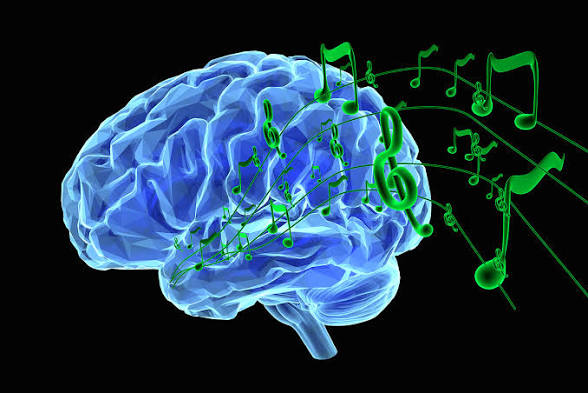
Piano Playing Is a Whole-Brain Activity
During a piano lesson, a child’s brain does not work in only one area. Piano playing requires the brain to read symbols, hear pitch and rhythm, control both hands, coordinate fine finger movements, remember patterns, regulate emotions, and make expressive decisions in real time.
This is why piano study is often described as a powerful whole-brain workout.
Frontal Lobes: Attention, Focus, and Emotional Control
The frontal lobes are involved in decision-making, attention, concentration, emotional regulation, and mood. Every time a student reads music, listens carefully, controls mistakes, stays focused, and makes expressive choices, this part of the brain is actively engaged.
In piano lessons, children constantly practice self-control. They learn to pause, listen, correct, organize, and try again. These are not only musical skills. They are the same executive-function skills children need for school, communication, and life.
Central Brain Regions: Movement, Planning, and Coordination
The central region of the brain supports motor control, movement planning, and coordination. At the piano, children train both hands to move independently, coordinate fingers with rhythm, and connect physical movement with sound.
This is one of the reasons piano training is so valuable. Few activities require such precise coordination between the brain, ears, eyes, hands, and body.
Parietal Lobes: Multi-Sensory Processing and Symbolic Thinking
The parietal lobes process multi-sensory input, body awareness, spatial understanding, and symbolic interpretation. This is especially important in music because students must translate written symbols into sound, rhythm, movement, and meaning.
A note on the page is not just a visual mark. For a pianist, it becomes a sound, a finger movement, a rhythm, a direction, and an expressive idea. This constant translation strengthens the child’s ability to connect symbols with action and meaning.
Occipital Lobes: Visual Perception and Pattern Recognition
The occipital lobes are responsible for visual perception, visual memory, object recognition, and spatial reasoning. When a child reads notes, recognizes musical patterns, follows the keyboard, and remembers musical shapes, this visual system becomes highly active.
Piano students learn to see structure. They begin to recognize patterns, sequences, intervals, shapes, and repetitions. This kind of visual and spatial thinking supports not only music reading, but also broader learning skills.
Temporal Lobes: Hearing, Memory, and Musical Understanding
The temporal lobes are deeply involved in hearing, auditory memory, sound recognition, rhythm, pitch, and musical understanding. This is where the brain processes melody, harmony, tone color, and the emotional quality of sound.
When children study piano, they learn to listen more deeply. They begin to hear differences in tone, articulation, balance, phrasing, and emotional color. This develops auditory discrimination, memory, and sensitivity to detail.
What Research Shows About Music and Brain Development
Scientific studies have shown that musical training can influence brain development. A well-known longitudinal study published in The Journal of Neuroscience found structural brain changes in children after 15 months of instrumental music training. These changes were connected with improvements in motor and auditory skills.
Research from the USC Brain and Creativity Institute has also shown that music instruction can support the development of auditory pathways and brain networks involved in sound processing and decision-making.
Other studies and reviews have connected music training with improvements in executive functions, including working memory, inhibitory control, and cognitive flexibility. Piano study is especially powerful because it combines fine motor control, listening, reading, memory, emotional expression, and disciplined attention.
Why Piano Is Especially Powerful
While many musical activities benefit the brain, piano study is uniquely demanding. A pianist must use both hands independently, read two musical lines at once, follow rhythm, listen to sound, control touch, remember structure, and express emotion.
This means that every piano lesson trains multiple systems at the same time:
- Hearing
- Vision
- Fine motor coordination
- Memory
- Focus
- Pattern recognition
- Emotional expression
- Discipline
- Self-correction
- Creative thinking
This is why piano lessons are not only artistic education. They are also cognitive training.
Piano Lessons Build Skills for Life
At Russian Academy of Music, piano education is not limited to learning pieces. Our goal is to develop the whole child: musicality, intelligence, confidence, emotional awareness, discipline, and independent thinking.
When children study piano consistently, they strengthen not only their musical ability, but also the cognitive systems that support learning, focus, creativity, and emotional intelligence.
A piano lesson is not just a music lesson.
It is a lesson in how to think, how to listen, how to focus, how to feel, and how to grow.